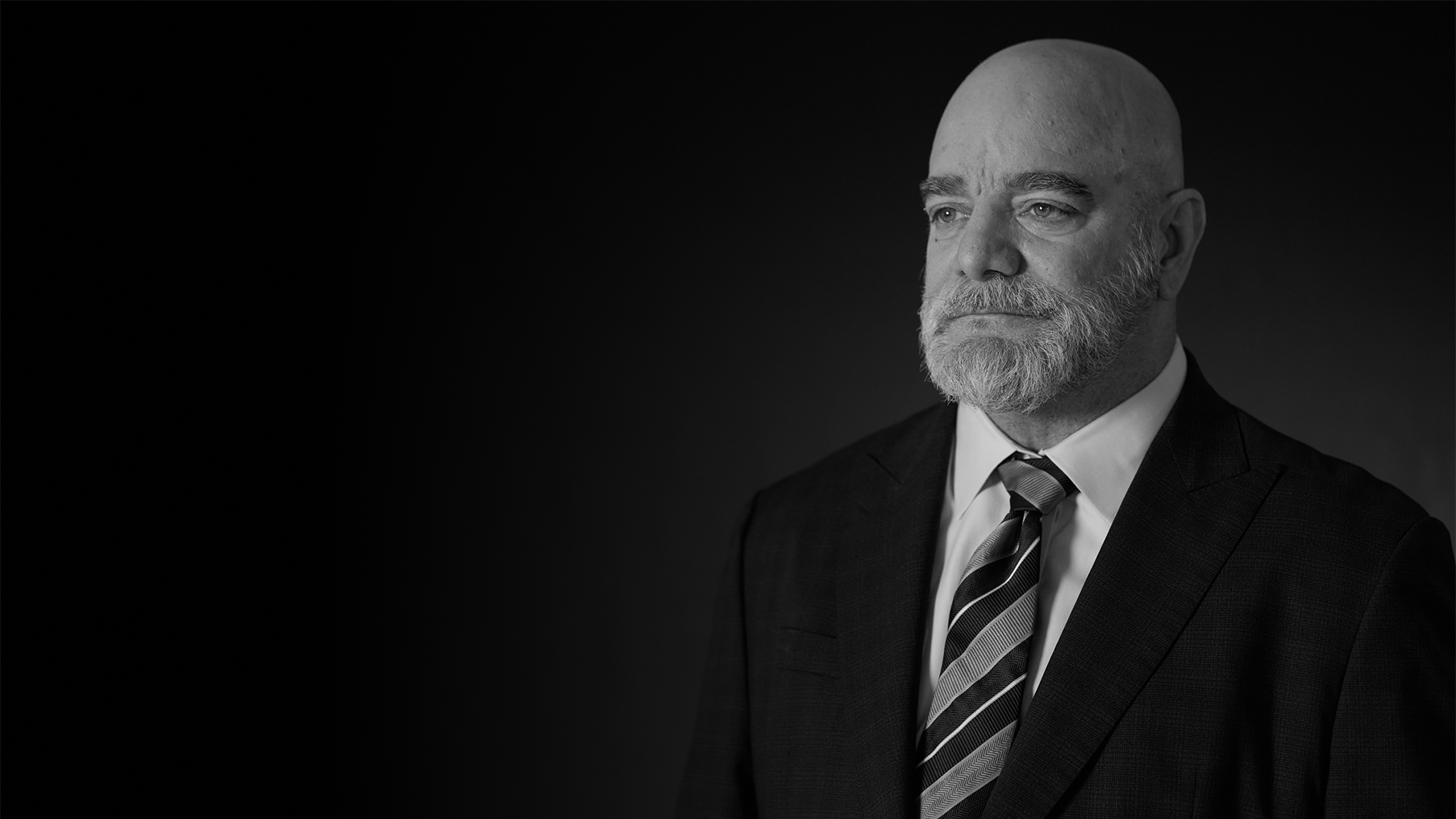

Steven A. HartPartner at Hart McLaughlin & Eldridge
Who stays in the fight when justice takes decades?
Steven Hart, that’s who.
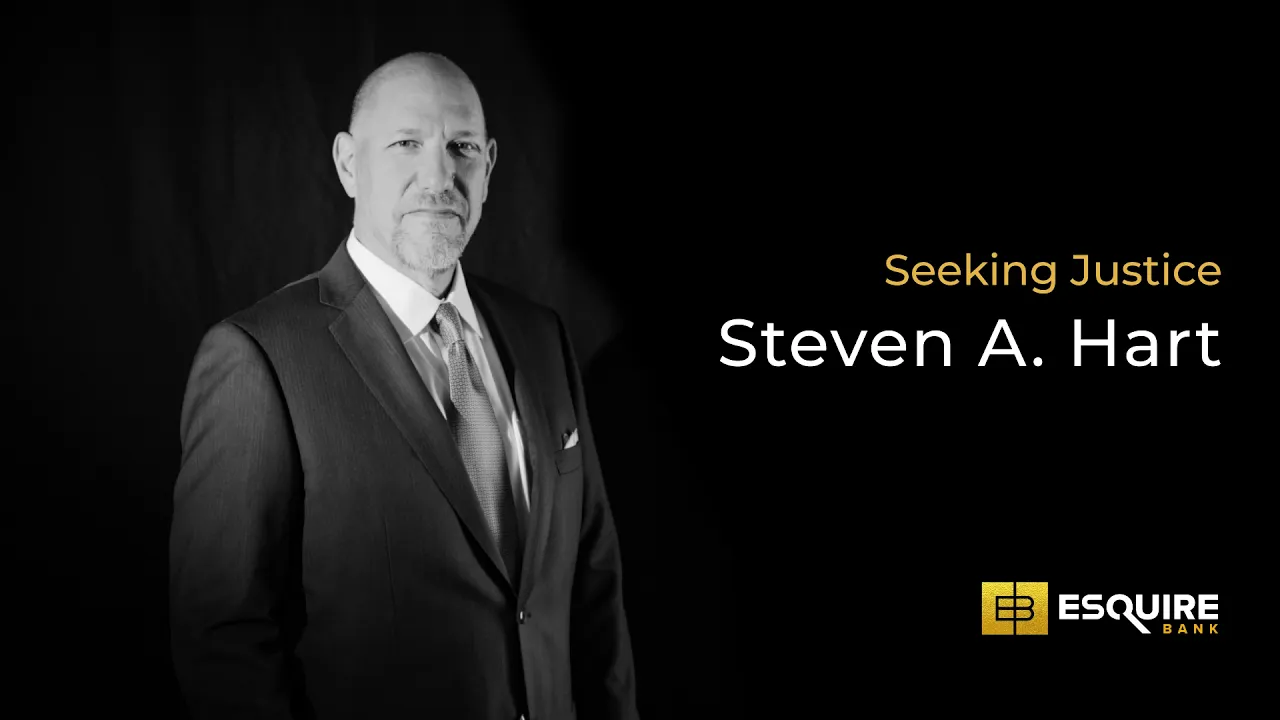
How Trial Lawyers Outlast the Powerful
Just one of Steven A. Hart’s cases took 10 years, an economist, and 16 of the largest poultry producers in the country. Another took 40 depositions to unravel a murder conviction built on a confession that was never recorded, never written, and never real.
Neither case was won in a single moment. Both required slow, relentless determination for justice.
“A 10-year commitment to prosecute a class action [lawsuit] means that we’re stubborn,” says Steven, founding partner of Chicago-based trial law firm Hart McLaughlin & Eldridge. “We never gave up.”
Answering the Call
Steven’s path into trial law started in Flint, Michigan. “It’s kind of a family business,” he says. “My dad was a trial lawyer in Flint, Michigan, for nearly 50 years. I’m the youngest of three boys. We all became lawyers.”
But the reason he stayed was different from the reason he started.
“When I started practicing law, what became moving to me was assisting people in their greatest time of need and finding a way to bring their lives back together,” says Steven. “When I’m confronted with a problem that someone’s experiencing, I want to understand and figure out what’s [most] important for them.”
But in the business of law, that understanding is a two-way street.
“[People] don’t really appreciate a lawyer until [they] need one,” he says. “[They’ve] been sued or injured and [they] want to receive reasonable compensation for injuries. That’s when people really understand what we do.”
What’s more, it’s possible these people will also come to understand that a courtroom isn’t neutral by default. This underscores another purpose of contingency fee law firms like Steven’s, ensuring that every person is allowed their day in court, regardless of their socioeconomic status.
“The system doesn’t treat everyone equally, and [being a voice] and advocate for [those] involved in litigation is super important,” Steven explains.
That advocacy is also the only real check on corporations that assume no one is watching. “If individuals or companies think they can do anything they want without accountability, that’s when problems [appear]. Lawyers hold them accountable to right their wrongs.”
“There are a lot of ups and downs in litigation like that…but you’ve got to have the big picture in mind. You’ve got to dig deep and say, ‘Tomorrow’s going to be the day that we win.’”
Steven A. Hart
Partner, Hart McLaughlin & Eldridge

“There are a lot of ups and downs in litigation like that…but you’ve got to have the big picture in mind. You’ve got to dig deep and say, ‘Tomorrow’s going to be the day that we win.’”
Steven A. Hart
Partner, Hart McLaughlin & Eldridge
A Decade of Class Action Against an Industry
When Steven and his partners founded Hart McLaughlin & Eldridge (HME), they set a standard for what would go on the docket. “We wanted cases that could make an impact in this world.”
The first test arrived about six weeks later with phone call from a close friend who handled class actions. The friend posited that they believed poultry producers had been fixing prices for years, significantly increasing costs for distributors and creating a snowball effect for both grocery companies and consumers alike.
The suit would eventually focus on the Northern District of Illinois and name the 16 largest poultry producers in the country. What made the theory viable were some numbers that didn’t add up.
“Our economist found an anomaly, that the input costs weren’t matching with the prices, and [he told us], ‘I think you have a real case here,’” remembers Steven. And in the process of discovery, they were able to demonstrate how it happened.
It worked like this: buyers would price their chicken off an index published by Georgia’s Department of Agriculture. The catch was, the state wasn’t the one calculating that number. Instead, it was calling the poultry producers and asking them what they charged.
Turns out, those producers were setting their prices in advance, and in a way that flaunted their status. According to Steven, they’d meet together “in a smoke-filled room, or in their private jets, or at a major golf tournament to agree on the prices they would all report to the state of Georgia.
And after 10 years, HME had settled with every defendant. “We ended up recovering well in excess of $285 million for our clients.”
To Steven, that poultry case was the clearest argument for a specific legal tool many people misunderstand. Class actions in federal court run on Rule 23, the provision that lets a single lawsuit stand in for thousands of people harmed the same way.
“In general, class action work is wonderful because the scope is so large, and [often], one individual can’t make a difference.”
That’s the reality of price fixing: the harm is spread so thin that no one person has reason to challenge it. Steven makes that fact clear: “No one would sue a chicken company because they paid three cents more for their chicken.”
Rule 23 is what closes that gap. “You can group tens or hundreds of thousands of plaintiffs who suffered a relatively modest loss,” he explains. “Industries would never be held to account unless class actions existed.”
A Confession, and Nothing Else
In the world of complex litigation, it’s common that your expertise on one case can inform work on other types of cases. That’s exactly how HME got involved in civil rights work, specifically wrongful conviction cases.
Wrongful conviction cases are the inverse of a class action. The cases turn everything toward a single person the system stopped listening to decades ago. HME came across these cases through the Innocence Project, an organization founded by attorneys to facilitate criminal justice reform and “help [previously] convicted people re-examine their cases.”
The law firm’s first client to come from the Innocence Project was Herman Williams, a Navy man with no prior criminal record, who was convicted of murdering his former wife and imprisoned for almost three decades.
“Over years and years, he fought for his freedom, and he won,” recalls Steven. “It was uncovered that the case they had presented to the jury was illegitimate.”
In fact, when HME first took Herman’s civil case, the original record contained close to nothing.
“[The prosecution] had no eyewitnesses, no weapon, and no forensics,” says Steven. “What they eventually claimed to have was a confession. But the confession wasn’t videotaped [or even written]. It was [only] claimed that he admitted to killing his wife. That’s it.”
The details around the claim didn’t hold up, either. A purse recovered from a garbage bin had supposedly been reported by a man who could not have communicated it to law enforcement. That’s where the case started to fall apart.
Egregious as it was, dismantling the rest took years of painstaking effort navigating dead officers, missing evidence, and vanished witnesses. “Through really hard work, we deposed around 40 people in the case,” Steven says. “We clearly demonstrated that his conviction was not legitimate.”
“There are a lot of ups and downs in litigation like that…but you’ve got to have the big picture in mind,” Steven adds. “You’ve got to dig deep and say, ‘Tomorrow’s going to be the day that we win.’”
The Partnership Behind the Perseverance
Both wrongful conviction and class action cases are expensive. What’s more is their considerable duration, something that quietly decides which law firms will sink or swim.
“You have to size up whether you’re willing to go into debt for a case that’s going to take five to 10 years,” says Steven. “If you don’t have a banking partner that’s equally committed, you’re in trouble.”
That was precisely the law firm’s weakest link throughout its first several years in business.
“Our previous bank had no idea how to deal with law firms. [They] didn’t understand that we have to spend money to make money,” he recalls. Fortunately, a colleague ended up pointing them in the right direction: toward Esquire Bank.
“Almost immediately, we knew that this was the partner we were looking for,” says Steven. “Esquire had sophistication in the legal industry like no other banking institution we had ever dealt with. They appreciated the cyclical nature of our business.”
In class action work, that financial backing isn’t a just convenience. It’s a qualification. Because Rule 23 requires a law firm to prove to the court it has the financial resources to fully represent the class.
“Without our relationship with Esquire Bank, we wouldn’t be in the running for lead counsel in class action cases,” Steven explains. “[We] could not do what we do without the financial backing of Esquire, period.”
Going the Distance
After 35 years in practice, what Steven wants is for the door to justice to stay open.
“Many of the people that we represent don’t have financial resources,” he says. “That’s why contingency fee agreements are so wonderful, because [those people] could never hire a lawyer [otherwise].”
But ask him what ‘going the distance’ means to him, and the answer has nothing to do with verdicts.
“If you’re able to sit in a room with your client, in tears, [and hear] them say, ‘Thank you so much, what you did for me changed my life,’ that is going the distance.”
CASES ARE PEOPLE, NOT PAPERWORK.
Beyond class actions and civil rights, a significant share of HME’s work is environmental. The firm has secured more than $150 million for its clients in one of Illinois’ largest toxic exposure settlements.
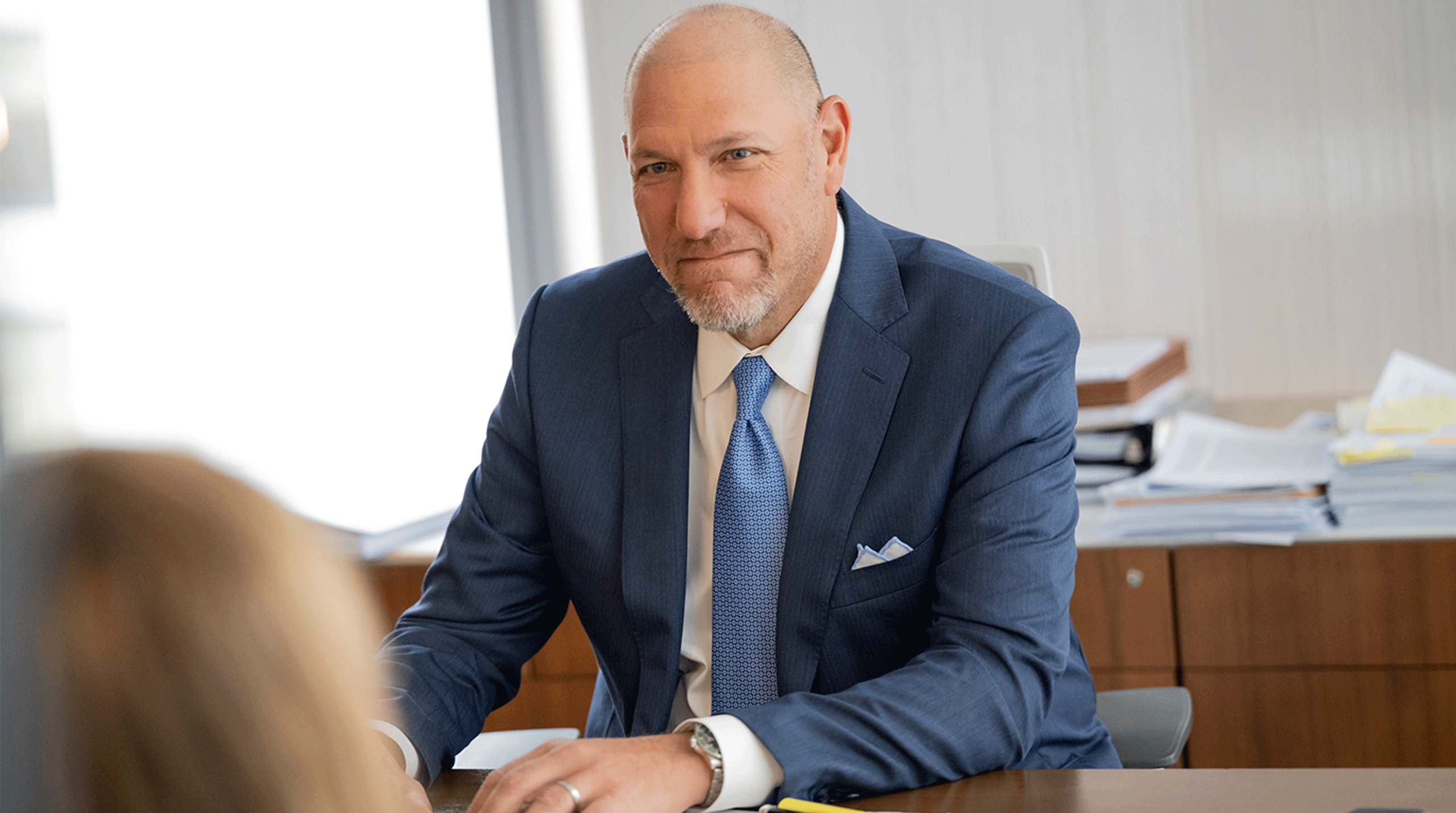
PASSING ON THE PLAYBOOK.
Steven is an adjunct professor of trial advocacy at Chicago-Kent and a frequent bar-association lecturer, giving him ample opportunity to help guide and mentor young lawyers.